

Oct 08, 2026
By: Admin
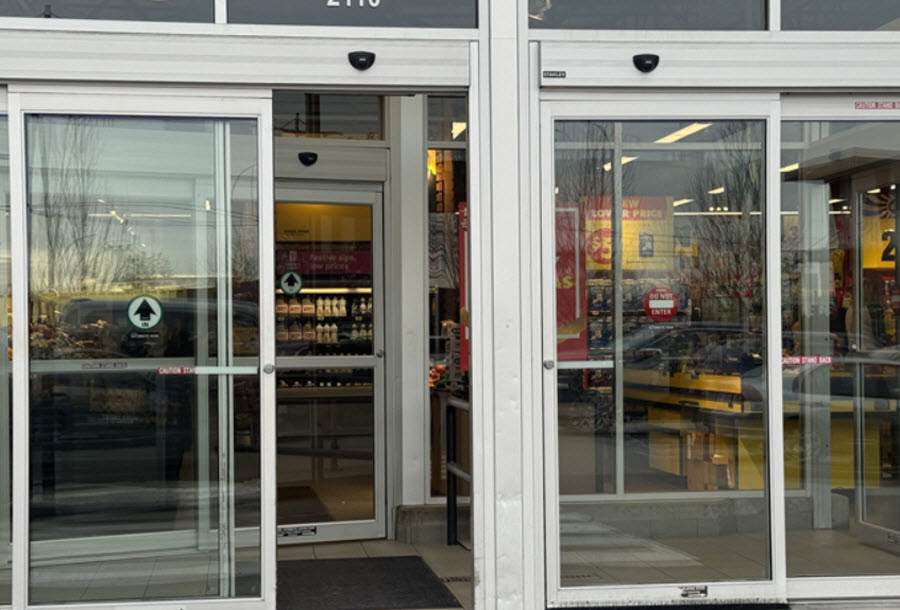
Managing a commercial property in Vancouver comes with endless operational priorities. From office towers in Downtown and retail centers in Kitsilano to industrial complexes near Marine Drive, keeping facilities safe and accessible is crucial. However, when a commercial entrance begins to malfunction, misconceptions often lead property owners to delay maintenance or make costly repair mistakes.
Believing common myths about commercial door maintenance can result in unexpected lockouts, building code violations, or expensive emergency service calls.
At Knock Knock Repair, we specialize in professional automatic door repair in Vancouver. Let’s dismantle the four biggest myths surrounding commercial entrance repairs so you can keep your property secure and fully accessible.
Myth 1: “As long as the door opens, it doesn’t need professional servicing”
• The Misconception: Many facility managers assume that if an automatic sliding or swinging door opens and closes without sticking, the system is completely healthy.
• The Reality: Automatic doors contain hidden mechanical and electrical components that wear down silently over thousands of daily cycles. Motor drive belts lose tension, internal trolley rollers develop flat spots, and safety sensors drift out of calibration long before a complete breakdown occurs. Regular preventative checks spot worn parts early, preventing sudden breakdowns that leave your building unsecured after business hours.
Myth 2: “Any general contractor or electrician can fix an automatic door”
• The Misconception: When a door stalls, property managers often call a general handyman or on-site electrician to inspect the control board or motor.
• The Reality: Commercial automatic doors are specialized electro-mechanical systems regulated by strict provincial safety codes. Fixing a door requires expertise in micro-processor control boards, microwave and infrared sensor fields, motor torque limits, and emergency breakaway systems. Uncertified repairs often void manufacturer warranties and can leave doors out of compliance with ANSI/BHMA A156.10 safety standards, creating severe liability risks for your property.
Myth 3: “A noisy or shuddering door means you must replace the whole system”
• The Misconception: When an automatic sliding door makes loud grinding noises or shudders along its track, owners frequently assume the entire multi-thousand-dollar operator unit is ruined.
• The Reality: Grinding noises and jerky movements are usually caused by minor, easily replaceable wear items. Trapped road grit in the aluminum track, worn nylon carriage wheels, or a loose drive belt are quick, low-cost repairs. A certified technician can replace worn tracks and rollers to restore whisper-quiet operation without needing a full system replacement.
Myth 4: “Commercial door repairs are too expensive to schedule proactively”
• The Misconception: Waiting for a total system failure feels like a way to save money on maintenance budgets.
• The Reality: Waiting for a complete breakdown is almost always more expensive. An emergency callout during peak retail hours or after-hours on a weekend incurs higher service fees. Additionally, a stuck-open door lets heated indoor air escape rapidly during cold, rainy Vancouver winters, driving up building utility costs. Proactive repairs protect your budget and prevent costly operational downtime.
The Pro’s Rule of Thumb: The 3-Point Door Health Test
If you are unsure whether your entrance requires technical attention, apply this simple three-part test:
The Distance Rule: Does the motion sensor detect an approaching pedestrian at least 43 inches away to allow a smooth, uninterrupted stride?
The Threshold Rule: Does the door remain open without closing when someone stops directly in the doorway threshold?
The Sound Rule: Does the door glide silently without scraping, grinding, or rattling sounds?
If your door fails any of these checks, scheduling a diagnostic review is the safest move.
What to Expect During a Professional Diagnostic Service
When you book a certified repair visit with a specialized commercial door team, the service follows a thorough diagnostic process.
1. Physical Track & Roller Inspection:
Technicians clear debris from internal track channels, inspect nylon wheels for flat spots, and check drive belt tension.
2. Sensor Pattern Calibration:
Using digital tools to map microwave and infrared sensor fields, ensuring full threshold coverage and zero false triggers.
3. Electrical & Motor Output Testing:
Measuring control board voltages, motor capacitor health, and battery backup power during simulated power outages.
4. Safety Reversing & Force Adjustments:
Calibrating automatic safety reversing sensitivity so door panels instantly back off upon light contact with obstructions.
Restore Entrance Reliability with Knock Knock Repair
Don’t let outdated myths or minor mechanical glitches compromise safety at your facility. At Knock Knock Repair, our certified technicians provide fast, reliable, and fully compliant automatic door repair services across Vancouver, Burnaby, and the Lower Mainland.
Get Started today